Lesson 4: No Ice Thanks, the dangers of the carburettor
In our previous lesson we saw that in a piston engine a mixture of fuel and air is brought to the cylinder, after which a “spark plug” ignites this mixture. The energy released during this combustion pushes a piston downwards, which in turn makes the engine's crankshaft rotate.

Some piston engines use a carburettor to create the fuel/air mixture. Injection piston engines draw in pure air, after which the fuel is injected, either directly or indirectly, and have no carburettor.
The great advantage of a carburettor is its simple construction, which makes it very reliable. A major drawback of the carburettor, however, is that it can freeze up. Not only at sub-zero outside temperatures, but also at temperatures of up to 20°C. How is this possible?
Let's first take a look at the construction of a carburettor, more specifically a float carburettor. The main components of the carburettor are the venturi, the jet, the float chamber and the throttle valve. The carburettor is placed between the cylinder intake and the air intake/air filter of the engine. While the engine is running, the engine's pistons move up and down and air is drawn in during the intake stroke.

Outside air is drawn in through the air intake and then flows through the carburettor. During its journey through the carburettor, the air has to pass through a narrowing, called the venturi. Because the diameter of the tube narrows, the air has to flow faster. The same phenomenon occurs here as with a wing or a rotor blade; as the air accelerates, the air pressure drops. The air pressure in the venturi therefore becomes lower than the surrounding air pressure. This causes fuel to be drawn out of the float chamber. A small tube is placed in the venturi which we call the jet. It is connected to the float chamber, which always contains a certain amount of fuel. The air pressure in this float chamber equals the surrounding air pressure and will therefore be greater than the air pressure in the venturi.
 The drawn-in fuel is atomised by the jet into the intake duct. A gas mixture of air and fuel is thus created, which is drawn in by the engine. The more of this mixture is drawn in, the more power the engine will develop. We can control the amount of mixture drawn in by opening or closing the throttle valve more or less.

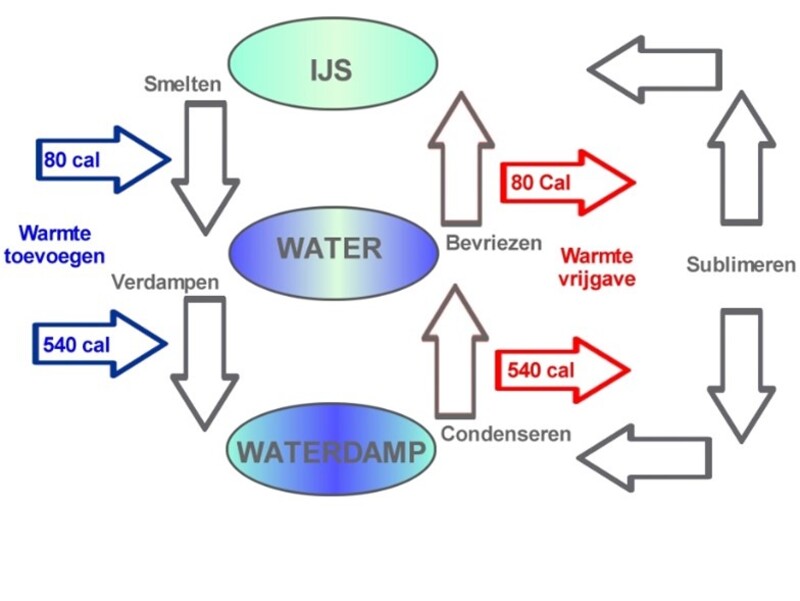
It is important to know that it is a gas mixture that is drawn in. Our fuel from the float chamber has therefore changed from a liquid to a gaseous state, or put simply: the fuel has evaporated. One important property in physics is that an evaporation process requires heat. Because this process absorbs heat, the surrounding temperature drops, and so the temperature in the venturi decreases.
In addition, the acceleration of the airflow also causes a temperature drop. (Think again of your hand stretched out of the car window. By tilting your hand it moves up or down, but apart from that it also feels cooler.)

These two phenomena (evaporation of fuel and acceleration of the airflow) can cause the temperature in the carburettor to become as much as 20°C colder than the outside air.
Not a problem in itself, were it not that pure air rarely occurs. Air usually also contains a quantity of water vapour and, as you know, water turns into ice at negative temperatures.
There is therefore a chance that ice forms in the venturi, which in the worst case can freeze up completely, so that the engine no longer gets any air, as it were. The position of the throttle valve makes an additional contribution to the susceptibility to ice formation. Around the throttle valve there is a drop in temperature due to the acceleration of the airflow, particularly at lower power when the throttle valve is not fully open.
We can remedy this problem by operating the ‘carb heat’ knob. The system has the ability to heat the air. From the cockpit, the pilot can operate a valve after which air, heated by the exhaust, is drawn in. In this way we can keep the temperature in the carburettor above freezing point.
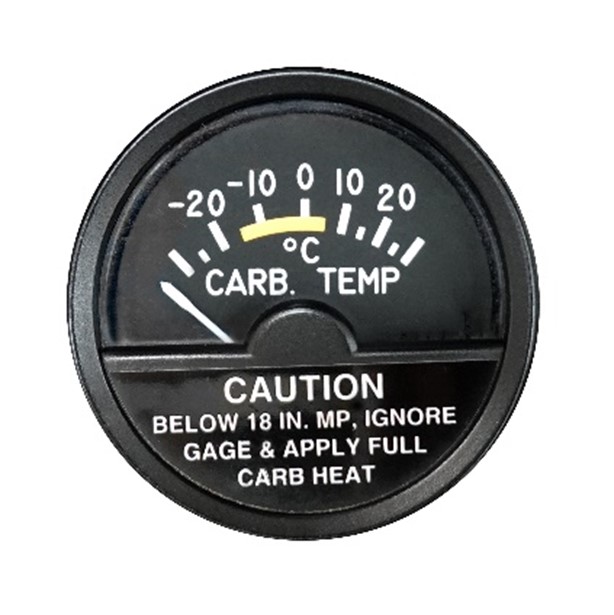 Do note, the idea is to heat the air before the carburettor gets the chance to freeze up. That is why the pilot has an instrument with which to monitor the temperature in the carburettor, the carb-temp.

During the flight, the pilot will ensure that the temperature does not enter the yellow zone by pulling out the carb-heat more or less. As you can see, the yellow zone on this instrument runs from +5 to -15°C. The colder the air, the less water vapour it can contain. Consequently, at very cold temperatures there will be too little water vapour in the air to cause the carburettor to freeze up.
Or, as helicopter pilots say: “I like my flights shaken, not stirred, but no ice, thanks”.
Credits:
- Photo, drawings and text @ C. Comyn – Toran Helicopter Academy
- Article source: https://www.helispot.be/hs/page/detail.asp?oid=i9f5g7F1
-
Blog
Toran is flying along with De Warmste Week!
Let's build together towards a future in which every dream counts and every child gets the chance to shine.

-
Blog
The values that keep us on track
At Toran, flying is all about trust, progress, humanity, and a genuine passion for what we do. In this article, you’ll learn how our values make a difference—both on the ground and in the air.

-
Blog
Viktor Verhulst is becoming a helicopter pilot
Do you dream of becoming a helicopter pilot? Viktor Verhulst proves it can be done! The TV maker is following an intensive training programme at Toran Heli Services & Academy to turn his passion for flying into reality.
